
You may also like
Ultra Light Polarized
Sunglasses Ultra Light Polarized
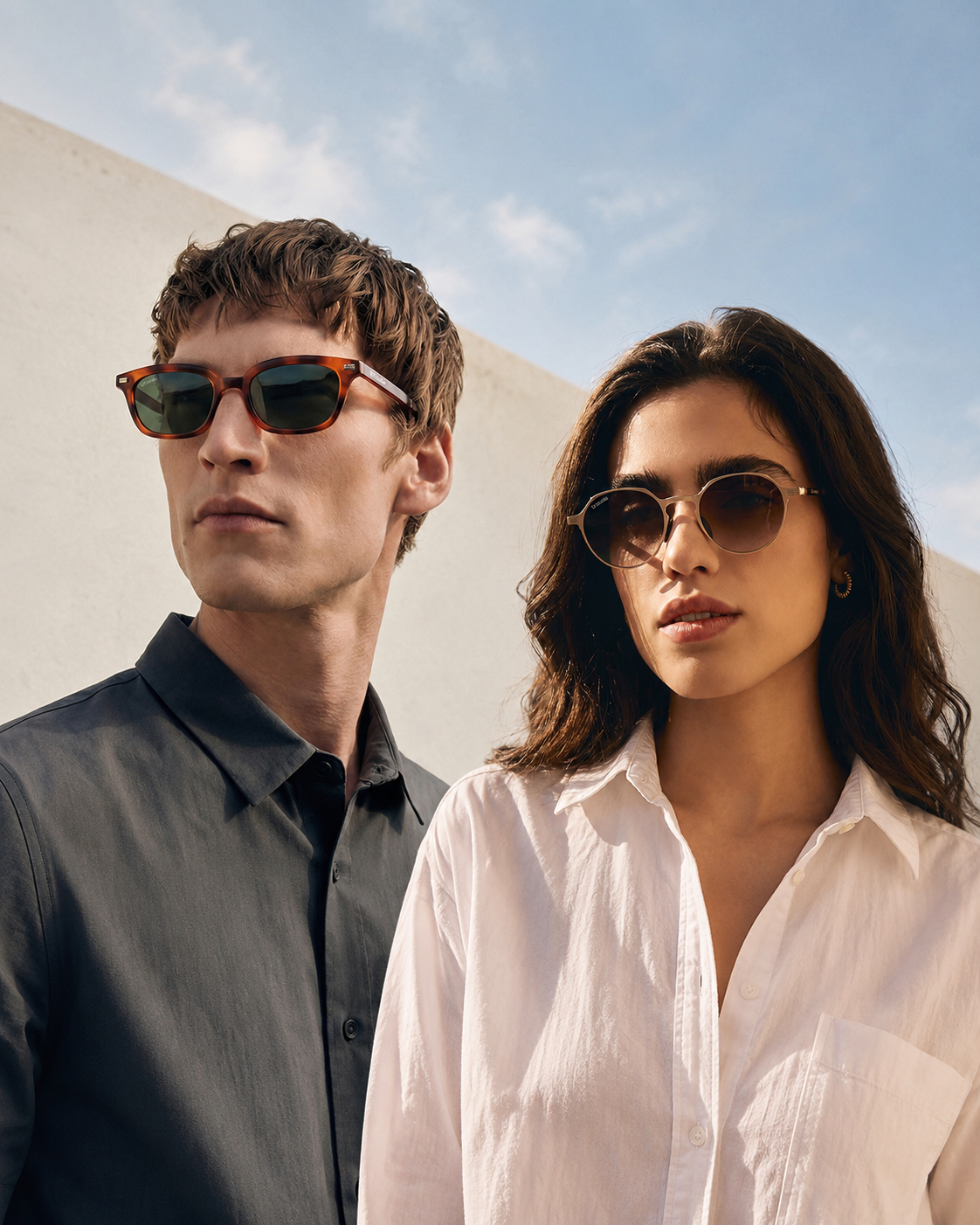
D.Franklin polarised sunglasses combine different frame shapes with lenses that reduce certain reflected glare. Compare fit, UV protection and filter category separately: a darker tint does not mean a greater degree of polarisation.
Polarisation does not dictate frame style. You can look for a subtle everyday silhouette or a bolder front, checking the lens specifications of your chosen option.
Read moreRead less
Polarisation, UV protection and filter category
These describe different features. Polarisation reduces certain reflections, UV protection concerns ultraviolet filtering, and filter category indicates the level of visible light filtering. Check each specification rather than judging by lens colour.
Polarised lenses do not necessarily change tint with the light. That is a photochromic feature and must be stated explicitly in the specifications.
Choose by silhouette, width and bridge fit
When comparing shapes, separate the outline from the size. Large round glasses create a different effect from narrow oval ones, even though both use curves. Square corners make the front more defined; a thin, transparent or low-contrast frame can soften that presence. Face shape can guide an aesthetic preference, but it does not require one particular silhouette.
Check visibility of the screens you use, such as a watch or navigation display, because polarisation can affect their appearance at some angles. If choosing glasses for driving, check the lens's stated suitability and category; polarisation alone is not enough to decide.
Filter category, cleaning and storage
Remove dust before using a clean microfibre cloth and follow the cleaning instructions. Keep your sunglasses protected in their case, without objects pressing against the lenses, and avoid exposing them to intense heat.
Explore related collections
Men's Polarised Sunglasses · Women's Polarised Sunglasses · Polarised Sports Sunglasses
Frequently asked questions
What should I compare when choosing from Sunglasses Ultra Light Polarized?
Compare the available options in these categories: geometric frames, round frames, rectangular frames, square frames, oval frames. Compare width, bridge and how far the frame extends at the temples before choosing a colour. Lens tint, polarisation and UV protection are separate specifications; check each for the exact version you select.
What does it mean if sunglasses are polarised?
They have a filter that reduces certain reflections, such as those from water or roads. Polarisation does not remove every reflection or determine UV protection on its own.
Is polarisation the same as UV protection?
No. Polarisation acts on reflections, while UV protection describes ultraviolet filtering. Check both features separately in the sunglasses' specifications.
Do polarised and photochromic mean the same thing?
No. Polarisation reduces reflections, while photochromic technology changes lens tint under specified conditions. Check the technologies separately: they can be combined but are not equivalent.
Does a mirrored lens have to be polarised?
No. A mirrored finish and a polarising filter are different features. Read the specifications to confirm polarisation; a visible reflection on the lens surface does not prove it.
How can I confirm that lenses are polarised?
Read the specifications of the selected frame and lens combination. Darkening when rotated against some LCD screens may be an indication, but it does not establish UV protection or filter category. Use the supplied product information as your reference.
Can I wear them for driving?
Check filter category and the lens's stated compatibility with that situation. A sports shape or tint change alone cannot establish that every version is suitable for driving.

